Sustainability & ESG FAQ

Sustainability requirements are evolving rapidly. Companies are increasingly asked to demonstrate measurable environmental performance, responsible sourcing and transparent governance — both internally and across their supply chain.
This F.A.Q brings together the most common sustainability questions we receive from customers and procurement teams. The answers are designed to support supplier qualification, ESG audits, CSR reporting and project documentation.
Do you have a formal CSR or sustainability policy?
Yes. AFPRO has a structured sustainability strategy supported by:
• A published sustainability report,
• A sustainable procurement policy,
• A code of conduct,
• An employee handbook covering governance and ethical standards.
Do you publish a CSR or sustainability report?
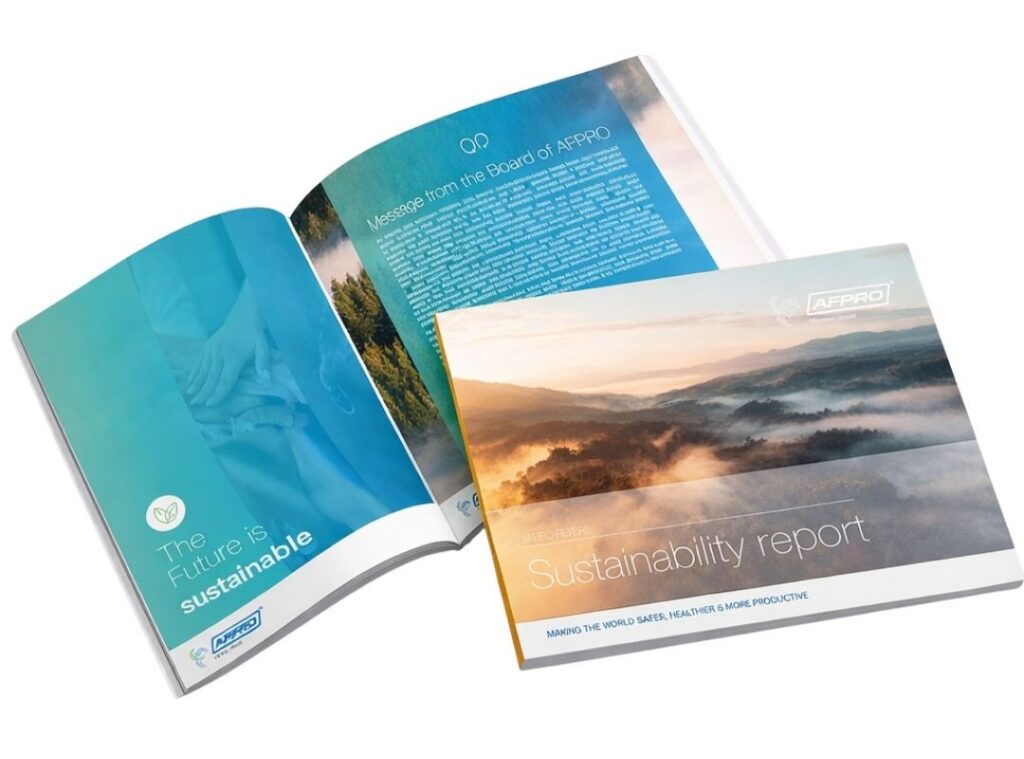
Yes. AFPRO publishes a Sustainability Report outlining measurable objectives, progress and key performance indicators.The report includes data on renewable energy usage, packaging reduction, supplier sourcing and product transparency.
Access our CSR report by clicking here.
How do you ensure ethical governance?
AFPRO operates under a formal governance framework including:
• a code of conduct
• an employee handbook covering ethical and operational standards
• compliance policies addressing anti-corruption, fair competition and data protection
These principles are aligned with common supplier code-of-conduct requirements used in procurement processes.
Are you assessed by an independent ESG organization?
Yes. AFPRO Filters has once again been awarded the EcoVadis Silver Medal in December 2025, and ranks among the top 25% of companies globally for sustainability performance. This year, our score improved by 5 points from 69 to 74. This independent assessment covers environmental management, ethics, labor & human rights and responsible sourcing.

Climate & environmental impact
Do you measure and report your greenhouse gas emissions?
Yes. AFPRO monitors operational emissions and energy consumption across its sites.
Our focus currently includes:
• monitoring Scope 1 and Scope 2 emissions
• increasing renewable electricity usage
• improving operational energy efficiency
• progressively structuring data to better support Scope 3 (value chain) reporting requirements
Today, 100% of electricity used at our logistics hubs is sourced from renewable energy. Across all operations, renewable electricity coverage currently stands at 22%, with a transition plan to increase this share.
Have you set climate targets aligned with recognized frameworks such as SBTi?
AFPRO’s climate strategy follows the principles of the science based targets initiative (SBTi).
Our actions focus on:
• increasing renewable electricity usage
• reducing operational emissions
• improving product-level environmental transparency
This structured approach helps align our climate actions with international climate objectives.
Why is supplier sustainability data becoming increasingly important?
Many companies now evaluate not only their own environmental impact, but also the impact of the products they purchase. Supplier-related emissions — often referred to as Scope 3 emissions — can represent a significant share of a company’s total carbon footprint.
Providing transparent sustainability data helps customers improve the accuracy of their environmental reporting and procurement assessments.
Environmental product data
Do you provide Environmental Product Declarations (EPDs)?
Yes. 60% of our product portfolio is supported by EPDs based on life-cycle assessments conducted according to ISO 14025 and EN 15804 standards, which ensures a standardized LCA (Life Cycle Assessment) methodology. However, these standards do not imply external (third-party) verification, and our EPDs are not yet externally verified.
Access our EPDs by clicking here.
Vos données peuvent-elles être utilisées pour des certifications bâtiment ?
Yes. EPDs provide verified environmental impact data that can be used in sustainability documentation for building certification systems such as BREEAM, LEED or HQE. This data helps project teams evaluate and compare the environmental impact of filtration solutions.
Can you provide product-level carbon footprint information?
Environmental impact indicators included in our EPDs provide quantified data based on life-cycle assessments. These data are calculated using “cradle-to-gate” methodology and can be extended to support broader lifecycle analysis depending on project requirements.
This information can support product-level environmental analysis and sustainability reporting within building projects or procurement processes.
Products & energy efficiency
How do your products contribute to emission reduction for customers?
Energy consumption represents the largest share of the total lifecycle cost of filtration systems. In typical HVAC systems operating around 6,000 hours per year, energy can represent around 70% of the total filtration cost.
AFPRO’s A+ energy-efficient filters can reduce energy consumption and associated CO₂ emissions while maintaining high filtration performance.
We can provide customized performance comparisons based on real operating conditions.
Can AFPRO support carbon or energy comparisons between filtration solutions?
Yes. AFPRO can provide comparative analyses between standard filters and energy-efficient solutions.
These comparisons can include quantified CO₂ impact and energy consumption differences, helping customers evaluate low-carbon alternatives.
Are your filters compliant with ISO standards?
Yes. AFPRO filters are tested and classified according to ISO 16890, which provides a standardized classification system for particulate matter filtration efficiency. This ensures transparent and comparable performance data.
Learn more about ISO 16890 by clicking here.
Circular economy & waste reduction
Do you offer circular or reusable filtration solutions?
Yes. AFPRO develops circular filtration solutions designed to reduce waste. For example, the APMR system combines:
• a reusable metal frame
• replaceable thermo-pleated ISO Coarse 70% filter media
Only the filter media is replaced, significantly reducing material waste.These solutions can be integrated into customer “green catalogues” or low-carbon product selections.
Have you implemented waste reduction initiatives?
Yes. AFPRO has implemented several initiatives to reduce material waste, including:
• 30% reduction in packaging waste
• 72% of packaging made from recycled FSC cardboard
• 100% recyclable stretch film used for pallet wrapping
• reduction of steel waste from 25% to 0%
These measures help reduce upstream environmental impact.
Responsible supply chain
Do you evaluate suppliers based on ESG criteria?
Yes. Our Sustainable Procurement Policy ensures suppliers are evaluated according to ESG standards and ethical practices. This includes environmental impact, ethical conduct, labour practices and compliance with international standards. Currently, 38.2% of our total purchasing volume is sourced locally, helping reduce supply-chain risk and transport impact.
Can AFPRO support supplier sustainability assessments and audits?
Yes. AFPRO filtration solutions can be integrated into customer green catalogues or sustainable procurement frameworks. We can provide structured sustainability documentation including:
• sustainability report
• EcoVadis assessment results
• Environmental Product Declarations
• product certifications and technical documentation
Where required, this data can be shared in structured formats and integrated into customer procurement systems or supplier databases. These documents help customers complete supplier qualification forms, sustainability assessments and ESG audits.
Contact & sustainability information
Who is responsible for sustainability within AFPRO?
Sustainability at AFPRO Filters is managed at corporate level and integrated across operations, procurement and product development. For ESG documentation, supplier assessments or sustainability-related requests, you may contact us at [email protected]